
The Special Educational Needs and Disability Code of Practice: 0 to 25 years January 2015 gives the following definitions:
Special Educational Needs (SEN):
“A child or young person has SEN if they have a learning difficulty or disability which calls for special educational provision to be made for him or her. A child of compulsory school age or a young person has a learning difficulty or disability if he or she has a significantly greater difficulty in learning than the majority of others of the same age, or has a disability which prevents or hinders him or her from making use of facilities of a kind generally provided for others of the same age in mainstream schools or mainstream post-16 institutions” (Introduction Section xiii and xiv)
Disabled Children and young People:
“Many children and young people who have SEN may have a disability under the Equality Act 2010 – that is ‘…a physical or mental impairment which has a long-term and substantial adverse effect on their ability to carry out normal day-to-day activities’. This definition provides a relatively low threshold and includes more children than many realise: ‘long-term’ is defined as ‘a year or more’ and ‘substantial’ is defined as ‘more than minor or trivial’. This definition includes sensory impairments such as those affecting sight or hearing, and long-term health conditions such as asthma, diabetes, epilepsy, and cancer. Children and young people with such conditions do not necessarily have SEN, but there is a significant overlap between disabled children and young people and those with SEN. Where a disabled child or young person requires special educational provision they will also be covered by the SEN definition.” (Introduction Section xviii)
The Code of Practice says:
“All schools should have a clear approach to identifying and responding to SEN. The benefits of early identification are widely recognised – identifying need at the earliest point and then making effective provision improves long-term outcomes for the child or young person.” (Section 6.14)
At Sturminster Newton High School we aim to identify the students who require additional support at the earliest opportunity and make provision for their needs
With the appropriate early intervention, children and young people make good progress and longer-term impacts are minimised.
SPECIAL EDUCATIONAL NEEDS MAY BE IDENTIFIED IN THE FOLLOWING WAYS:
- Concerns raised by teachers or the SENCo
- Concerns raised by parents/carers
- Diagnosis by Healthcare professionals
- Information from previous schools
- Liaison with external agencies
- Teacher assessments or concerns with student progress
- Literacy, Numeracy and Cognitive Ability Assessments
- Classroom observation
SPECIAL EDUCATIONAL NEEDS ARE CATEGORISED IN THE FOLLOWING AREAS:
- Communication and Interaction
- Cognition and Learning
- Social, Mental and Emotional Health
- Sensory/Physical Need
LEVELS OF INTERVENTION
Universal Provision: describes quality inclusive teaching which takes into account the learning needs of all the children in the classroom. This includes providing differentiated work and creating an inclusive learning environment.
Such teaching may, for example, be based on clear objectives that are shared with the children and returned to at the end of the lesson; carefully explained new vocabulary; use of lively, interactive teaching styles and the maximum use of visual, auditory and kinesthetic resources to enhance learning.
Targeted Provision: describes specific, additional and time-limited interventions provided for some children who need help to accelerate their progress to enable them to work at or above age-related expectations. Targeted provision is often aimed at a group of pupils with similar needs.
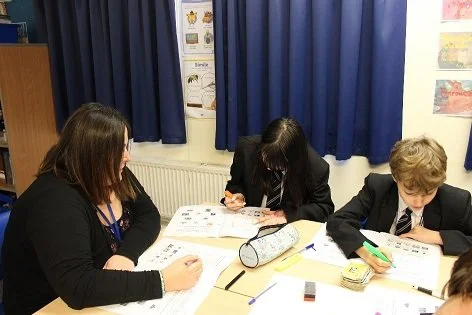
Such intervention may take the form of additional adult support in the classroom or interventions where students are withdrawn from lessons to participate in small groups or individual learning. These Interventions allow students to access additional learning resources to enable them to fully engage in the Curriculum.
Specialist Provision: describes focused provision for a minority of children where it is necessary to provide highly tailored intervention to accelerate progress or enable children to achieve their potential. This may include specialist interventions, including the use of outside agencies and outreach support.
At Sturminster Newton High School, we take pride in supporting the individual needs of our students and offer a carefully planned and personalised approach. We offer a broad and comprehensive range of support that responds to social and emotional difficulties as well as academic learning needs.
ADDITIONAL SUPPORT MAY include:
- In-class support where Teaching Assistants work with individuals or small groups
- Additional Literacy and Numeracy lessons
- Handwriting tutorials
- 1:1 Specialist Literacy Support
- Provision of outside online tutorial to support Maths and English
- Targeted programme for English as an Additional Language (EAL) students
- Speech and Language Support
- Social Communication and Nurture Groups
- Emotional Literacy Support (ELSA)
- Pastoral support
- Counselling and bereavement services
- School Nurse
- Behaviour Support Services
- Supported and supervised morning and lunch breaks in designated area
- Work from outside agencies
- Guidance and support from outside agencies including: Educational Psychologist Service (EP), Special Educational Needs Support Service (SENSS), Child & Adolescent Mental Health Service (CAMHS), Speech and Language Therapist (SALT) Hearing and Visual Impairment Team.
- Exam Access Arrangements
For a more comprehensive list of support available at Sturminster Newton High School, please refer to our Provision Map.
Provision Map SEND Policy 25-26 Accessibility Plan 24-27Further Information
SEND POLICIES CAN BE FOUND ON THE SCHOOL POLICES PAGE
SENDIASS Independent Information and Support
SEND Code of PracticeDorset Education Advice Line is a phone line for parents, carers and professionals who support children who may have special educational needs and disabilities (SEND). This advice line is part of our Local Offer to children, young people and families and will work alongside existing services such as SENDIASS and the Education Psychology helpline.
https://www.dorsetcouncil.gov.uk/dorset-education-advice-line-deal
For all other enquiries please contact our SENCo/Inclusion Manager: Mrs S Hoffmann on office@mysnhs.net
In this section
